
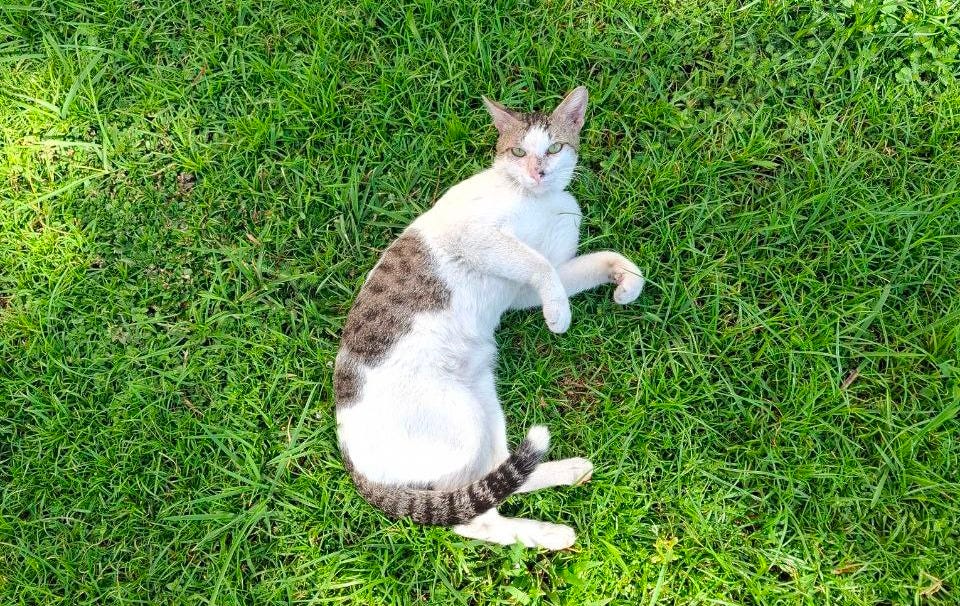
On the morning of July 5, a fellow Cats of CV volunteer messaged to say that Jordan, a smug-faced white-and-gray tabby, had already crossed the rainbow bridge. He was hit by a car, on a private road where vehicles are supposed to be cruising at just 20 kph.
I don’t know where he got the name. I’m not even sure if he liked me (and tbh, he did not look grateful for the food). But I liked Jordan. He was fat, and he had the face of a warlord.
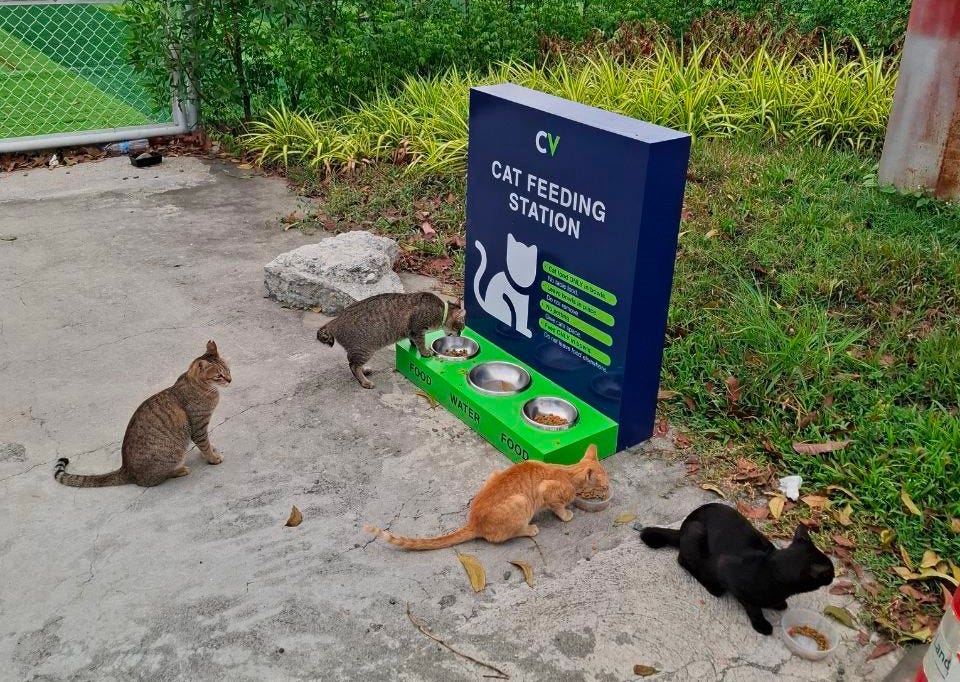
Most days, feeding the community cats is a happy exercise, a ritual that is inconsequential but weirdly important. Then there are days like July 5, when I find myself wondering: if other people can be so careless with the lives I’m trying to protect, why should I even bother doing it?
So, why do we even bother?
Apparently, we’re not alone in that question. In the UK, a study called Time Well Spent (commissioned by the National Council for Voluntary Organisations, or NCVO for people who like acronyms) asked thousands of people why they volunteer.
And it turns out, most people aren’t trying to save the world. Some top motivations include:
“I wanted to improve things/help people” (40%)
“The cause was important to me” (34%)
And then—somewhat hilariously—“I had spare time” (31%).
There are many other reasons, and the list goes up to more than 10, but a full third of volunteers got involved simply because they had spare time. And it was true for me back in 2024.
It’s very far from all-consuming altruism. It’s a whim I came to like, and then love.
Another framework called the Volunteer Functions Inventory outlines (in a very structured way) the different reasons people step up: to express values, gain knowledge, build careers, find community, boost their self-esteem, and create a sense of purpose.
In other words, volunteering is personal, functional, and practical—and a viable engine to protect or nurture a part of the world that you hold dear.
And in my case, it was an ungrateful tabby. RIP, king.
The showing up spectrum
In one of my writing sprints (I am delulu about mainstreaming social good, hence these exercises lol), I created a five-stage funnel that charts where people land depending on their season of life, mental load, and willingness to leave the house.

Unaware, apathetic, and apolitical. These are the folks tuned out of social issues, not because they’re bad people, but because life feels overwhelming enough as it is. Survival mode > saving the world. Their attention is elsewhere: bills, burnout, maybe just binge-watching.
“IDK, IDC.” / “I’m just trying to get through the week.”Curious and sympathetic. They’re not deep in the trenches, but their heart’s in the right place. They want to help, just not all the time. Ideal for low-effort, drop-in, feel-good engagements that don’t require a huge commitment.
“I care, but life is busy. Can I just show up sometimes?”The activated changemaker. These people are hands-on, mission-aligned, and action-oriented. Whether it’s volunteering, organizing, or donating time and skills, they’re already making moves. They just need the right cause, structure, or community to plug into.
“I’ll spend my weekends doing something that matters.”
(Ex. Your friend, Valerie, who feeds and rescues stray cats in BGC)The social good champion. They’ve made social impact their main hustle, not just a side interest. They’re entrepreneurs, advocates, educators—dedicated to building a better world, one long-term solution at a time. Give them resources, networks, and visibility—they’ll run with it.
“This is my life’s work.” (Ex. Your friend, Kate, who just opened her zero-waste store and dreams of scaling)The powers that be. They’re the funders, policymakers, execs, and leaders with the power to shift systems. They care—and they know their best play isn’t showing up to clean-up drives, it’s opening doors, writing checks, and moving big levers.
“I have wealth, position, influence—I’ll help from the top.” (Ex. Your boy Bill Gates, who is going all in fighting disease and poverty)
Becoming a full-on social good champion usually takes a big shift, something life-changing like a realization of your purpose, maybe an awakening. Or a meltdown in S&R, god knows.
But the jump from curious to active? I think that’s very simple. Don’t start with “change the world” because you will choke, and it will be ugly.
Just show up once.
Maybe that’s how it begins, and maybe that’s enough.